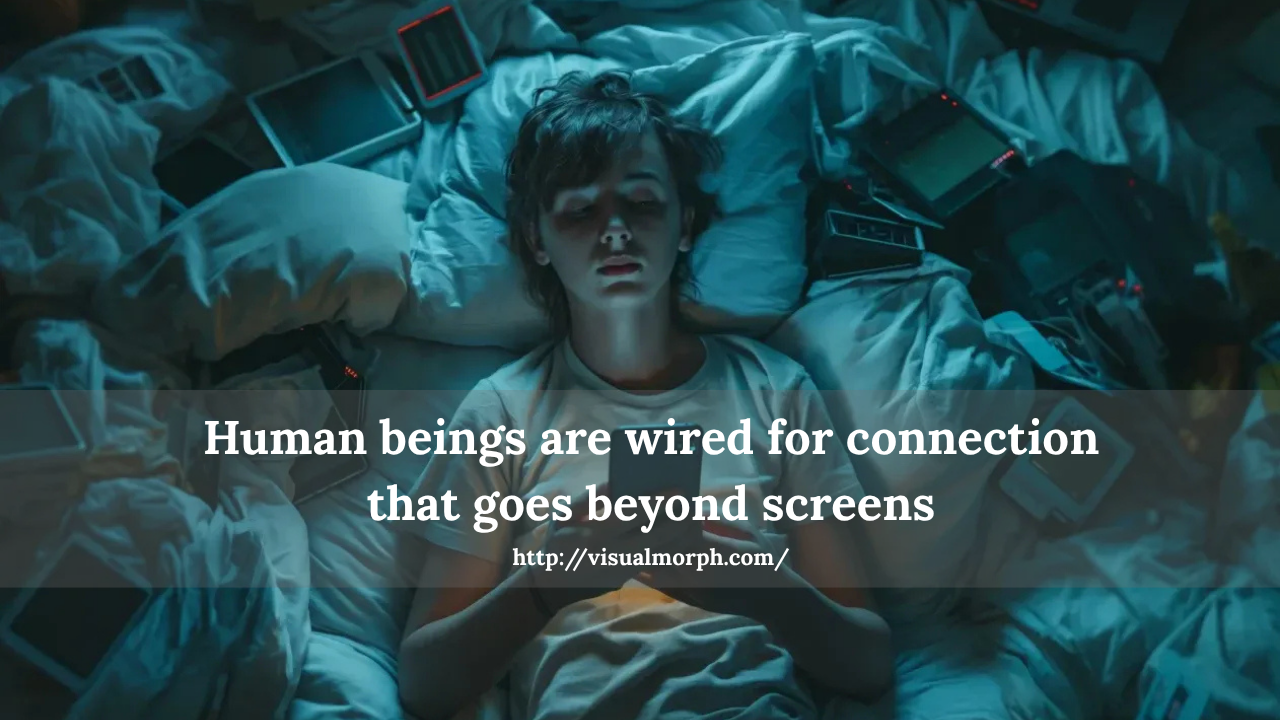
In an age where we can share a photo, send a message, or join a virtual event in seconds, it’s tempting to believe we’ve never been more connected. Social media platforms promise constant communication, providing a digital space where friendships are maintained, relationships are kindled, and communities are built. Yet beneath this digital interaction lies a growing sense of isolation—a paradox of being “alone together.”
The phrase “alone together” perfectly captures the emotional landscape of our hyperconnected lives. We’re online all the time, liking photos, replying to comments, and scrolling through feeds. But these interactions are often shallow, leaving us feeling more like passive observers than active participants in meaningful relationships. The rise of social media has redefined what connection means, and not always for the better.
One of the main issues is that social media fosters surface-level engagement. A “like” on a friend’s post or a short comment might maintain a sense of presence in someone’s life, but it rarely leads to deep, fulfilling conversations. Over time, relationships that once thrived on shared experiences and heartfelt discussions are reduced to fleeting digital interactions. We feel involved, yet emotionally distant. The sense of community is there, but the intimacy is not.
Additionally, comparison culture plays a major role in this modern isolation. Social media platforms are often filled with highlight reels—perfect vacations, exciting milestones, and carefully curated snapshots of life. Constant exposure to these idealized versions of reality can lead to feelings of inadequacy, loneliness, and even depression. We compare our everyday struggles to others’ polished moments, leaving us with the false impression that we’re the only ones who don’t have it all together.
There’s also the issue of digital overexposure. The more time we spend scrolling, the less time we invest in real-world interactions. Being physically present with loved ones has been replaced, in many cases, by sharing memes or exchanging emojis. While these forms of communication can be fun, they don’t satisfy our deeper need for emotional connection and genuine presence. As a result, we may find ourselves surrounded by online friends yet feeling profoundly alone.
However, it’s important to recognize that social media is not inherently harmful. It has connected people across continents, given marginalized voices a platform, and helped maintain relationships through long distances and challenging times. The problem arises when social media becomes a substitute for, rather than a supplement to, real-world interaction.
To combat the “alone together” phenomenon, we need to use social media more intentionally. This means prioritizing quality over quantity in our interactions—reaching out with genuine messages, setting up phone calls or in-person meetups, and being mindful of how much time we spend online versus engaging with the world around us.
Ultimately, human beings are wired for connection that goes beyond screens. We crave authenticity, empathy, and shared presence. If we can balance our digital lives with real-life relationships, we can reclaim the depth and meaning of true connection—even in a tech-driven world.